


James Deakin & Sons Ltd

© Ken Hawley Collection Trust - K.0276

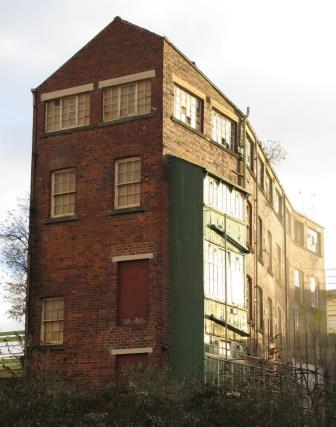

James Deakin (1822-1900) was born in Sheffield, the son of John (a Britannia metal smith) and his wife, Rebecca. James followed his father’s trade. In 1845, he married Sarah, who was the daughter of William Pitchford, a farmer from Upper Hallam. James was living at Steel Bank, but by 1851 he and Sarah had started a family and had moved to Queen Street. In 1866, he established James Deakin & Co for the manufacture of electro-plate and Britannia metal goods. The firm occupied Sidney Works, fronting Matilda and Sidney Streets. It was described as a four-storied factory consisting of the usual mix of dwellings, workshops, warehouse, and courtyard, with a grinding wheel, one condensing 10-horse-power steam engine, one six-horse-power high-pressure steam engine, two boilers, and troughs. Water for the boilers was drawn from the Porter Brook and a spring water well. Deakin shared these premises with other manufacturers, but would eventually own and occupy the whole site (Sheffield Daily Telegraph, 20 June 1868).
Deakin’s working-class roots were reflected in the location of his home at Prospect Place in the suburb of Heeley. His workforce was modest, too: in 1871, it was eight men, three boys and fifteen girls. However, he was able to bring his sons – William Pitchford (1846-1931), John (1848-1935), and Albert (1858-1937) – into the business. By 1871, it was known as James Deakin & Sons. In 1881, the workroll (according to the Census) was 170. The firm produced all types of silver and plated cutlery, including table and pocket knives. The trade mark was a shop counter bell; and the company registered silver marks in Sheffield in 1878, 1894, and 1896. Offices and showrooms were opened at 48 Holborn Viaduct, London, and in Glasgow and Belfast. Later the London office was at Charterhouse Street. Export markets included Australia, South Africa, India, and the Continent.
In 1893, James Deakin retired. In the following year, the firm acquired the trade mark and goodwill of electro-plate and Britannia metal manufacturer Shaw & Fisher. In 1897, Deakin’s sons registered James Deakin & Sons as a private limited company. Nominal capital was £100,000 (£56,000 paid up), with an offer of £50,000 debentures to the public. Average annual profits were stated as £7,000. Deakin’s workforce was said to have expanded from about 300 in 1887 to about 500 at the turn of the century (Ironmonger, 12 November 1887; Sheffield Independent, 22 January 1900). The accuracy of these figures seems doubtful, but certainly Deakin’s was expanding steadily. The company had purchased additional land to expand the factory along Matilda Street, with new buildings on the other side of Porter Brook. An engraving of Sidney Works, which fronted a Deakin catalogue (c.1900), showed a new multi-storey block, which was linked by two walkways over the Brook. The walkways had been built originally to provide access to a new set of water closets. The sanitation had been demanded by the Council, which then objected to the plans for walkways (Sheffield Daily Telegraph, 10 July 1897). Deakin’s won a court appeal and the lattice footbridges duly appeared.
James Deakin died on 21 January 1900, aged 77, at his home Rupert House, Rupert Road, Nether Edge. He had suffered from heart trouble and an attack of bronchitis. He was buried in Ecclesall, where his tombstone can be seen. He left £5,440. His death received little mention in the local press. An obituarist mentioned his humble origins, but little else (Sheffield Independent, 22 January 1900). Although his factory was one of the largest in the silver and cutlery trade, he had kept a low profile and took little part in public, political, or business life (apart from running his company). By the 1870s, he was listed as a director of The Universal Permanent Building Society (established in 1869). But he never accepted (or was probably never offered) any civic post; and took no interest in the Company of Cutlers.
In the years leading up to the outbreak of the First World War, Deakin’s output mirrored that of other leading Sheffield silverware and electro-plate firms, such as Hutton, Dixon, Atkin, Walker & Hall, and Mappin & Webb. Its pre-1914 catalogue showed a similar array of candlesticks, picture frames, trays, and tea and coffee services. It made a speciality of highly ornate prize cups, which could be custom engraved on the shield with scenes of particular sports: cycling, football, and sailing, for example. Cased cutlery sets could also be purchased or individual spoons, forks, and table knives (the latter available in shear steel and a range of handles, such as stag, ivory, or xylonite). The firm even sold bottles of Deakin’s anti-tarnish cleanser! These products earned steady profits. Deakin’s was able to meet the interest on its debentures and pay a good dividend (usually about 10 per cent). Profits rose during the War, spurred by government contracts. In 1917 and again in 1918 Deakin’s paid a 12½ percent dividend to the shareholders (mostly members of the Deakin clan).
The results of this expansion can be seen in a catalogue published in about 1920. The frontispiece depicted another multi-storey addition to the Works, which also faced onto Matilda Street and was likewise linked by an enclosed walkway over the Porter Brook. The firm had acquired another ‘name’: silverware maker Walter Latham & Son. Deakin’s had its own electro-plating and gilding tanks, stamping shops for spoons and forks, silverware departments, and buffing rooms. The factory had a grinding ‘wheel’ for table cutlery, which according to one report had been modernised to comply with government regulations (Sheffield Daily Telegraph, 3 May 1920).
The catalogue showed a wide range of Sheffield silver and electro-plate goods: presentation cups, flower stands, tea trays, communion sets, gentleman’s smoking requisites, photo frames, candlesticks, presentation trowels and mallets. Cutlery items included ‘Firth’s celebrated’ stainless table knives (with xylonite handles), cased cutlery, ‘Quaker’ tableware, pocket-knives, and scissors. The range of products, however, was not quite as impressive as in the pre-1914 catalogue. The markets for ornate sterling silverware and electro-plated goods were declining. Stainless steel was developing fast and customers were demanding cheaper products. In 1931, Deakin’s began to advertise ‘Bell Brand’ pewterware.
In the early 1920s, profits had dipped and so too had shareholders’ dividends (to about 5 per cent). During the ensuing Slump, the firm fared badly. Deakin’s had remained family owned, but its senior management was increasingly geriatric (or even dead). Willis Deakin, a director and son of William Pitchford Deakin, was found one Saturday morning (14 July 1917) in a lavatory in the Works. He had locked himself in the previous day and swallowed a tumbler of cyanide. The inquest jury returned a verdict of ‘suicide whilst of unsound mind’ (Sheffield Daily Telegraph, 17 July 1917). In the 1930s, the founder’s elderly sons passed from the scene. William Pitchford Deakin, Kenhurst, Kenwood Park Road, died on 19 January 1931, aged 84. He was still managing director of Deakin’s and at 82 had presided over the annual meeting of the firm in 1929. He had also been chairman of W. J. Myatt of Birmingham, safety razor manufacturer (Yorkshire Post, 13 April 1931). He was buried in Ecclesall, leaving an estate of £34,197 (net personalty £23,485). John Deakin, Elmleigh, Holbeck Hill, died on 24 June 1935, aged 87, and was buried in the same cemetery (he bequeathed £328). Albert, the last surviving brother, died at his home, The Mount, Kingfield Road, died on 22 May 1937, aged 78, leaving £58,246. His obituary recorded that he had been a freemason (Royal Brunswick Lodge) and an avid collector of pictures, owning about 130 (Sheffield Daily Independent, 24 May 1937).
After William Pitchford Deakin’s death, the family’s direct involvement in the business apparently ended. In early 1932, Deakin’s had merged with Fenton Bros, at South Moor Works. William Alexander, Fenton’s chairman, became managing director of both concerns. Sidney Works was to be expanded by the addition of a department for pen and pocket knives and the installation of a plant for making scissors and chromium plating. The factory also intended to produce French-licenced chromium-plated tea kettles, coffee percolators, electric radiators and metal surrounds (Sheffield Daily Telegraph, 17 December 1932). Three years later, Deakin and Fenton became part of a larger group – Silver & Steelcrafts Ltd – which also included J. H. Potter & Sons. The company prospectus outlined an ambitious and complicated arrangement led by London investors and businessmen (Weekly Dispatch, London, 24 November 1935). The first chairman was Jacob ‘Jack’ Davis Somper, a London solicitor and East End politician. The only recognisable Sheffield name on the board was Cyril Aubert Potter (1888-1964), who was the son of J. H. Potter. Manufacturing plant at Sidney Works was to be transferred to Fenton’s South Moor Works, Earl Street. The production of cutlery and silverplate was to continue, but the long-term intention was to develop the business in aircraft and motor car parts (hence the name Steelcrafts). Nominal capital was £125,000 (£45,000 in ordinary shares and £80,000 in preference shares).
The Stock Exchange became suspicious of the merger and suspended dealings in its shares (leaving half the share issue in the hands of underwriters). In 1936, the preference dividend was postponed (the company made an annual loss that year of £8,280). By 1937, Silver & Steelcrafts Ltd disintegrated amidst recriminations over the appointment of Sheffield directors and the supply of Sheffield goods to the parent company. Somper resigned and later declared personal bankruptcy. In 1939, Cyril Potter filed for bankruptcy, too, having proved a hopeless managing director. Besides drawing a salary from Silver & Steelcrafts, he had milked his own company of £18,313 (about £1¼ m at 2020 prices), partly to fund his gambling at the dog races. He became a traveller for Rockingham Plate & Cutlery Co, which was fronted by his wife, daughter, and brother Percy (Telegraph & Independent, Sheffield, 17 November 1939). After the War, Cyril would be tried for conspiracy and corruption in connection with this firm (Belfast Telegraph, 16 September 1952).
Deakin’s had ceased to trade and a receiver was appointed, after an application by the debenture holders (Yorkshire Post, 13 August 1936). In 1939, the assets of James Deakin & Sons, Steelcraft Works, Earl Street were offered for sale (Birmingham Post, 1 July 1939). The sale included the freehold premises, plant, machinery, dies, trade marks, fixtures, and stock-in-trade. Within months, a new trading entity had appeared at 6 Earl Street: Deakins (Silversmiths) Ltd. Apart from its accountant subscribers, the directors were William H. Whitaker, Clarence S. Whitaker, and Harry Latham. Capital was £25,000 (Sheffield Telegraph & Independent, 13 October 1939).
In 1943, Silver & Steelcrafts was struck off the register. By then, Deakins (Silversmiths) Ltd had returned to Sidney Works, Matilda Street. It was liquidated in 1967. The name James Deakin & Sons Ltd had been acquired by cutlery manufacturer I. S. Dearden. Most of Sidney Works was demolished and became a car park. One ramshackle wing survived and stood marooned overlooking the Porter Brook, until its renovation in 2013.