


Joseph Wostenholm & Sons Ltd

Advertisement from White's 1868 Directory
Joseph Wostenholm (c. 1813-1876) was listed in 1837 as a razor manufacturer in Eyre Lane, with a residence in Church Street. (Originally, the name appears to have been spelled as ‘Wolstenholme’.) The next directory listing was in West Street in 1841. In that year, Joseph Wostenholm, razor manufacturer (and tea dealer), late of West Street and residing occasionally in Clerkenwell, London, was declared insolvent. Joseph Wostenholm was listed later, however, as a razor manufacturer in Steelhouse Lane (1845) and Rockingham Street (1849).
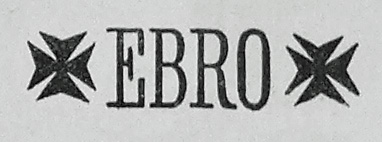
In 1856, Joseph Wostenholm & Sons advertised as a manufacturer of razors and cutlery in Leicester Street. Four years later, the enterprise was operating from Meadow Street, where besides making razors the owner was running a beer house. In 1857, Joseph was bankrupt. By 1863, the firm was operating from Perseverance Works in Penistone Road and Wostenholm’s son, also named Joseph, took over. One corporate mark was ‘2565’. Another was the word ‘EBRO’, apparently granted in 1773, and assigned to Joseph Wostenholm in 1864. In that year, he advertised Bowie and scalp knives. In 1868, the firm advertised as a razor and table knife manufacturer. Joseph Wostenholm, the founder, died on 30 April 1876. He left under £750.
The business was continued by Joseph Wostenholm Jun. (1842-1926). However, by the turn of the century his trade was negligible. In 1904, he sold the assets for £60 to Kastor Brothers of New York. Kastors thereby acquired the ‘EBRO’ mark, but more particularly the Wostenholm name. The reconstituted ‘limited’ company was named Perseverance Works in Rockingham Street. It had £1,000 capital, but none of the shares were paid up and its seems that the company was merely a vehicle for Kastors and their Sheffield associate (Alfred Williams) to stamp contract knives with the ‘Wostenholm’ name. In 1905, George Wostenholm & Son launched a legal action against its namesake for allegedly using the famous name with the intention to deceive. The legal action against what George Wostenholm’s regarded as a ‘Jew firm of merchants’ was tried at the start of 1906 (Sheffield Independent, 1 January 1906). It revealed that Kastor and Williams bought knives from Hounam and that Williams had been a tenant on its premises for over a dozen years. The premises were formerly known as Rivington Works and had offices, warehouses, and a forging shop, but no manufactory (Sheffield Evening Telegraph, 10 January 1906). Wostenholm forced Kastor to retreat and in 1907 Williams voluntarily wound up Joseph Wostenholm Ltd. However, Kastor and Williams continued to use the ‘EBRO’ mark (Kastor later also acquiring the marks of Butcher.