


W. H. Parkin & Sons

© Ken Hawley Collection Trust - K.0827
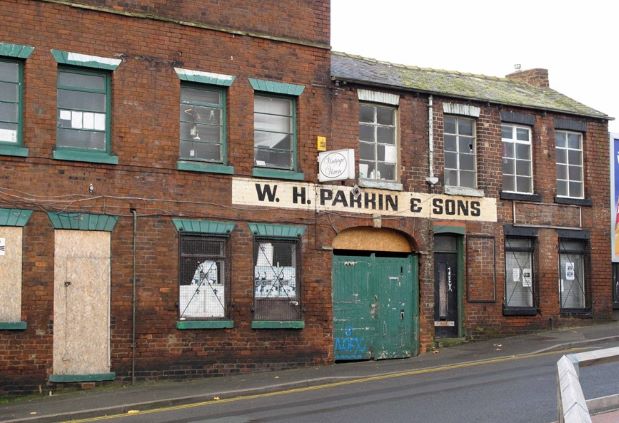
W. H. Parkin & Sons was launched in 1900 at 188 Rockingham Street. The firm supplied handles for the cutlery firms. The founder was William Henry Parkin (c.1852-1909), who was a bone, haft, and scale cutter, who lived at Gleadless Road, Heeley, with his wife Elizabeth Windle Rhodes (c.1855-1931). Their sons were Jeremiah (1873-1959), Herbert (1877-1928), William Henry (1890-1919), and Joseph (1895-1968). Jeremiah and Herbert were the original ‘sons’ in the firm. Their father died on 28 August 1909, aged 57, leaving £469. His burial was at City Road Cemetery. His son, William Henry, died on 8 March 1919 from pneumonia and was also buried at City Road. He had tried to claim exemption from military service as a conscientious objector (Birmingham Daily Post, 23 December 1916).
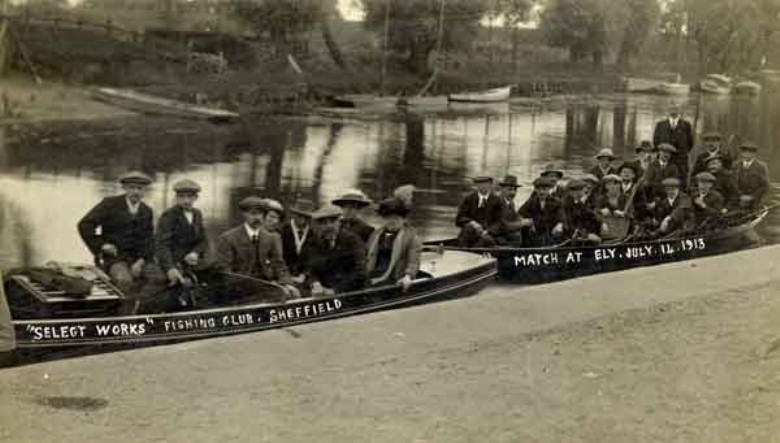
Jeremiah and Herbert became the senior partners. It seems that their brother, Joseph, later worked at the firm. It continued to trade at 188 Rockingham Street, where W. H. Parkins & Sons was a tenant (with others) at Select Works. This factory (which was owned by John W. Biggins of Biggins Bros was so dilapidated and dangerous that in 1922 the Factory Inspectors were granted a temporary closure order (Sheffield Daily Independent, 23 May 1922). Herbert Parkin, Holmesfield, Derbyshire, collapsed and died on the morning of 8 May 1928. He was travelling into work on the bus with one of his sons. He was a sports enthusiast and in Sheffield was ‘known by almost everyone in connection with minor football’ (Sheffield Daily Telegraph, 9 May 1928). He was interred at City Road, leaving £2,313. His will was proved by his widow, Jane, and his sons Herbert (1899-1973), Cyril (1903-1967), and Frederick (1901-1952). Herbert was an engineer; Frederick and Cyril were bone cutters, presumably at the family firm.
Besides cutting bone, Parkin’s increasingly adopted celluloid – a cheaper substitute, but dangerously flammable. In 1930, and again in 1931, the company was fined for storing celluloid in an unsafe manner in a cellar. At that time, Select Works had 33 tenants and about a hundred workers – so Parkin’s must have been a small operation. Jeremiah Parkin protested that the factory regulations were unworkable and that he had no alternative store room for celluloid. But above it was a metal worker, with a stove resting on a wooden floor, in which there was a hole! (Sheffield Daily Telegraph, 25 September 1931). Two years after Jeremiah’s protestations, ‘xylo’ dust caught fire at the factory, though it was fortunately soon extinguished by the fire brigade (Sheffield Daily Independent, 9 August 1933).
Jeremiah seems to have retained control of the firm until the 1950s. He was the only family member listed as a partner in Kelly’s Directory of Sheffield (1951). Meanwhile, Cyril had become involved in cutlery and after the War founded Parkin Bros (possibly with Frederick). Jeremiah Parkin died on 3 September 1959, leaving £22,252. His son, William Henry Parkin (1914-1976), apparently continued the business until his death on 21 October 1976. His estate was valued at £36,577. On Rockingham Street, Select Works (and the W. H. Parkin & Sons’ signage) survived into the twenty-first century. In 2018, the local press reported that the derelict premises had been occupied by up to sixty homeless people a day and had been used as a drug den (Sheffield Star, 24 December 2018). The company records were deposited in Sheffield Archives.