


George Bocking / William Bocking

© Geoff Tweedale (SCC Picture Sheffield [v02194]) - former premises of William Bocking, Ebor Works, 53 Gell Street
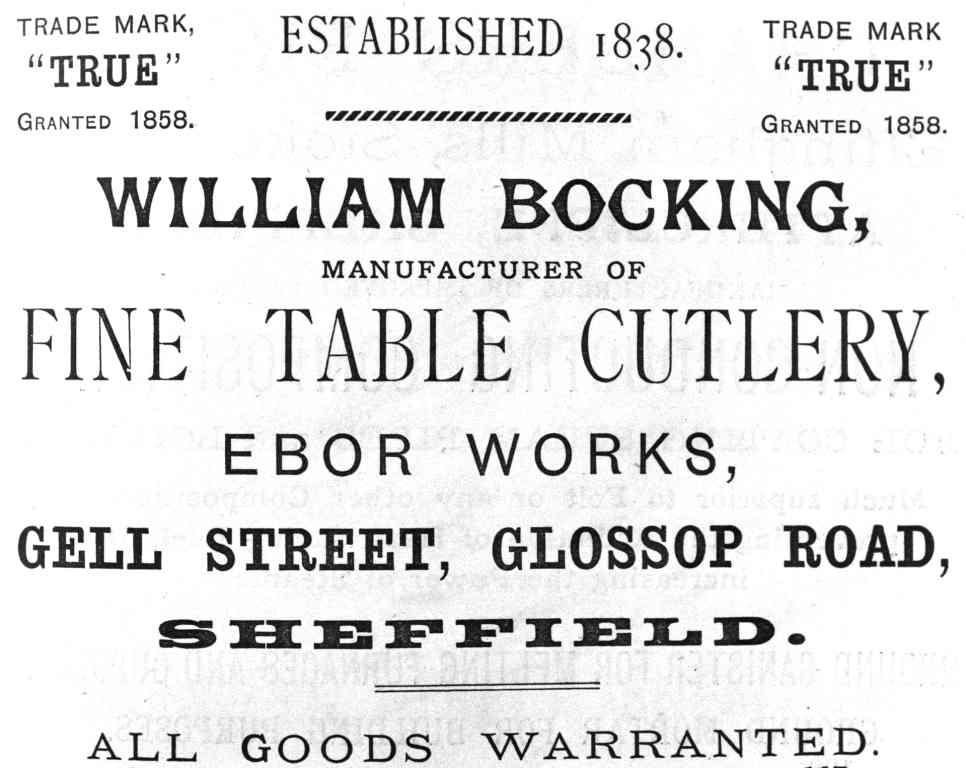
George Bocking was born in Sheffield on 23 October 1807, the son of Abraham (a grinder) and his wife, Hannah. Company advertisements suggest that he launched his business in 1838. He was listed as a table knife manufacturer in a directory in 1849, when the firm was located in West Street. It started modestly and for several years George combined it with shop keeping and running Porter Tavern in Sharrow Vale – a pub now known as Porter Cottage. He employed a dozen men by 1851. Eventually, Bocking shed his role as a publican to concentrate on table cutlery and in 1871 had relocated to Gell Street. However, he had developed symptoms of mental illness by 1871, when he was remanded for assaulting his wife (Sheffield Independent, 17 July 1871). George died at Fisherton House, a mental institution in Salisbury, on 29 June 1872, aged 64, ‘after a severe affliction’. He was buried in Fulwood, leaving under £5,000. His brother, William Bocking, was entrusted with the care of his sons, George and William. As executor, he sold his late brother’s stock-in-trade and personal effects (Sheffield Daily Telegraph, 29 March 1873).
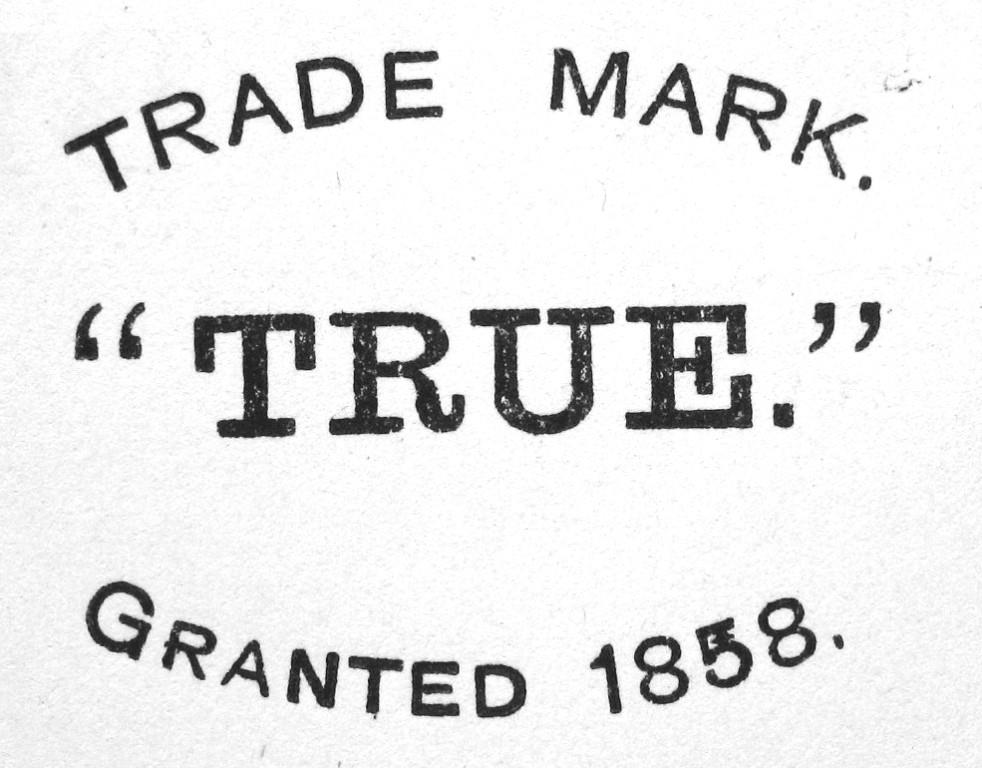
By 1879, George’s son, William (1857-1946), had re-established the business as William Bocking (‘late Geo. Bocking’), Ebor Works, 53 Gell Street. The factory was described as ‘large and spacious’ in The Century’s Progress (1893), but was a modest building, employing apparently no more than thirty or so workers. It marketed fine table knives, pocket knives, and ‘every description of silver cutlery’. Table cutlery was a speciality and Bocking guaranteed it as hand-made from double-shear steel. The trade mark, ‘TRUE’, was bought for £10 from Horrabin in 1885; and a silver mark was registered in Sheffield in 1898.
William Bocking managed the Gell Street business into the twentieth century. He also apparently remained active in the inter-war years. He died on 9 February 1946, aged 88, and was buried in Fulwood. The company ceased trading. The factory was later occupied by Simpson Miles; and by Edward Spencer, who continued to use the ‘TRUE’ mark (Whitham & Sykes, 1953). Ebor Works was derelict by the late 1980s, when the author photographed it. Modern buildings now cover the site.